Beyond the Emergency: The Realities of Using Ambulances for Quadriplegic Travel vs. Personal Vehicle Adaptations
posted on - 2026-08-24
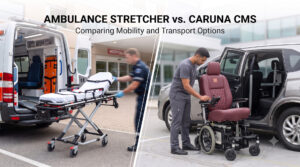
For individuals living with quadriplegia (tetraplegia), reliable transportation is a core pillar of independence, social connection, and access to healthcare. When specialized Wheelchair Accessible Vehicles (WAVs) are unavailable, families often resort to hiring private non-emergency ambulances for routine travel. While ambulances provide a necessary stopgap for bedridden transfers or clinical discharges, relying on them for everyday mobility introduces significant logistical, financial, and emotional friction.
The Hidden Pain Points of Ambulance-Based Travel
Using non-emergency patient transport services (NEPTS) for non-clinical trips—such as attending family events, running errands, or visiting public spaces—comes with several major drawbacks:
-
Compounding Recurring Costs: Private ambulance rentals charge a base fee per trip alongside per-kilometer rates and hourly standby charges. For an individual attending frequent rehabilitation sessions or social outings, monthly transport expenses can quickly outpace the cost of vehicle ownership.
-
Loss of Spontaneity: Private ambulances operate on tight medical rosters and generally require booking 12 to 24 hours in advance. Impromptu trips, last-minute schedule shifts, or casual outings are practically impossible.
-
The “Medicalization” of Daily Outings: Riding on a stretcher inside a medical vehicle—surrounded by gurneys and clinical hardware—reinforces a patient persona rather than a sense of active lifestyle inclusion.
-
Ergonomic & Postural Discomfort: Ambulances are designed for supine medical transport rather than upright, contoured seating. Long stretches on a flat stretcher can exacerbate pressure points or muscle spasms for individuals with spinal cord injuries.
-
Dependency on Third-Party Crews: Families remain tied to the arrival times, driver availability, and protocol constraints of external service providers.

The Strategic Shift: Installing a Wheelchair Transfer Device in Your Car
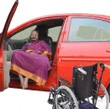
Equipping a personal family vehicle with an adaptive transfer system—such as a powered swivel seat, turn-out seat, or docking wheelchair transfer device—fundamentally changes the daily dynamic.
┌─────────────────────────────────────────────────────────────────┐
│                      TRANSFORMATION PROFILE                     │
├────────────────────────────────┬────────────────────────────────┤
│    Non-Emergency Ambulance     │     Personal Vehicle Device    │
├────────────────────────────────┼────────────────────────────────┤
│ • High recurring per-trip cost │ • One-time capital investment  │
│ • Requires prior booking       │ • On-demand, 24/7 availability │
│ • Clinical/stretcher travel    │ • OEM car seat comfort & style │
│ • Complex crew coordination    │ • Single-caregiver operation   │
└────────────────────────────────┴────────────────────────────────┘
-
True On-Demand Mobility: Having an adapted car in your driveway restores the freedom to travel anywhere at a moment’s notice.
-
Dignity & Passenger Comfort: Automated transfer seats allow the individual to ride in the front or middle row alongside family members, utilizing standard automotive climate control, upholstered cushioning, and factory safety restraint systems.
-
Long-Term Financial Return (ROI): While adaptive transfer technology requires an upfront investment, it eliminates third-party transport fees entirely, breaking even within months for active individuals.
-
Effortless Caregiver Operations: Modern transfer devices use motorized swivel-and-lower mechanisms or integrated docking frames. This eliminates manual lifting, protecting caregivers from chronic lumbar strain or back injuries while ensuring a smooth transfer.
Direct Comparison
| Feature / Metric | Private Non-Emergency Ambulance | Personal Car with Transfer Device |
| Primary Design Purpose | Medical patient transfer & clinical support | Daily personal travel & community integration |
| Cost Structure | High per-use operating cost (Base + Km + Wait time) | Upfront hardware installation; minimal incremental trip cost |
| Booking Flexibility | Pre-scheduled windows; subject to fleet availability | Immediate, 24/7 personal access |
| Seating Experience | Lie-flat stretcher or basic bench seat | Ergonomic, upright car seating with OEM seatbelts |
| Physical Effort for Family | Handed off to ambulance attendants | Motorized, push-button transfer operated by one person |